

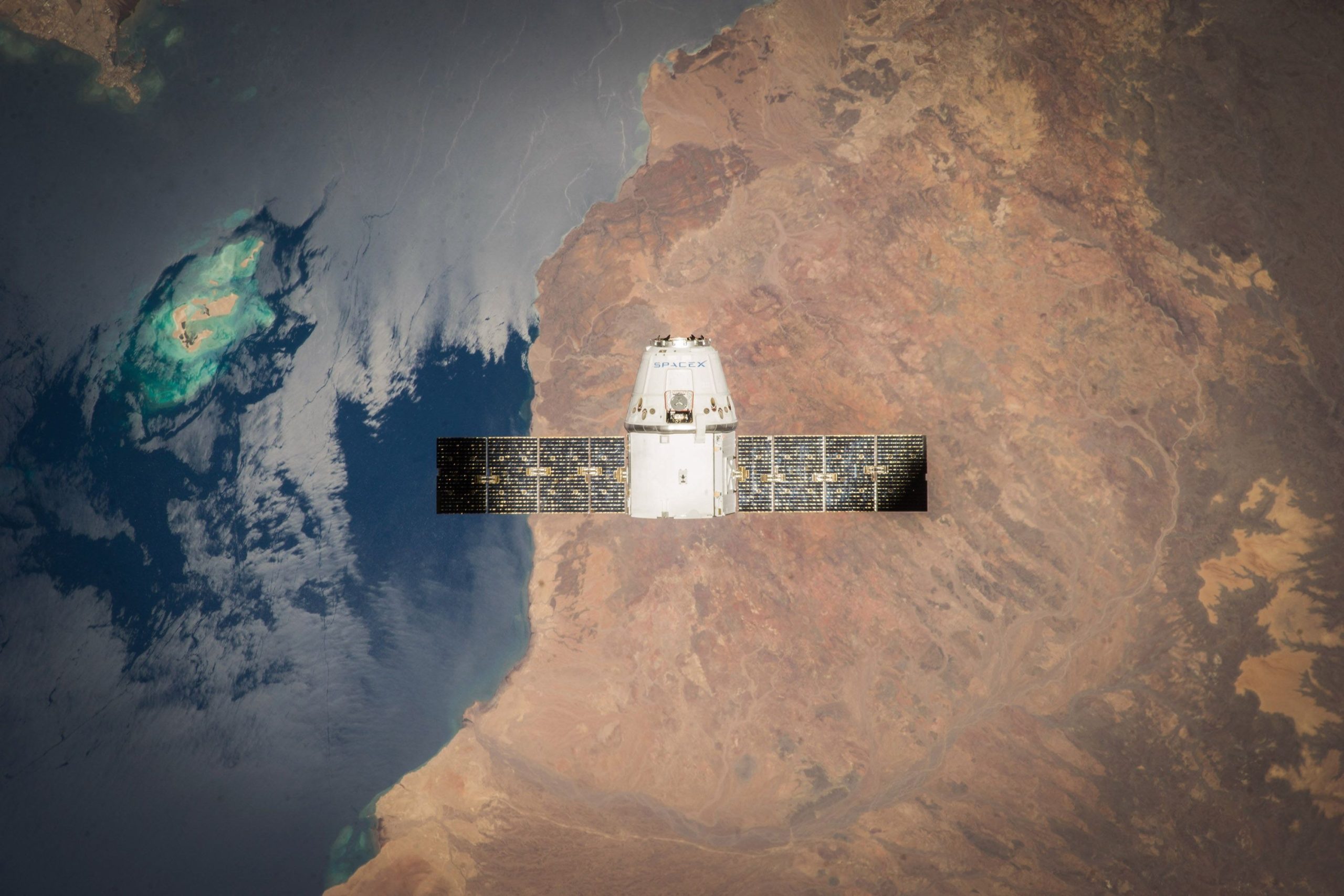
Applications in defence, space, long-range drones and maritime environments are driving demand for batteries in Europe with different requirements than those of the conventional market. In these areas, the focus is on energy autonomy, operational safety, resistance in demanding conditions and its own industrial capacity to supply strategic programmes.
The European market for batteries for extreme applications moves in a different terrain than conventional stationary storage or high-volume electric mobility. In defence, space, surveillance drones, advanced aviation or maritime systems, the priority is not only cost, but also reliability, weight, safety and performance under particularly demanding operating conditions. This ranges from equipment that must operate for long periods without maintenance to platforms subjected to large variations in temperature, vibration or impact.
Whys European strategic autonomy so important in this area?
Recent years have shown that dependence on third countries on critical raw materials, battery components or industrial technology can lead to a bottleneck with a massive economic impact. For this reason, Europe has decided to promote a complete value chain, which includes everything from the extraction and processing of materials to recycling, including the manufacture of cells and their integration into industrial applications. Having a solid value chain is essential to reduce supply risks and shield our competitiveness. Basically, we are talking about industrial sovereignty: whoever controls the batteries controls a large part of the electrified economy.
In the space field, Europe maintains a consolidated industrial base. Saft, a subsidiary of TotalEnergies based in France, presents itself as a European leader in space batteries and has participated in programs such as Ariane, Vega and Galileo. According to documentation from the French space sector, Saft has supplied batteries for more than 950 satellites since 1966 and is the only company that has qualified and produced the three main rechargeable technologies used in space: nickel-cadmium, nickel-hydrogen and lithium-ion.
Space also remains a specific market within the European advanced battery ecosystem. An estimate published in 2026 puts the European space battery market at $57.72 million in 2024, with a forecast to reach $98.28 million by 2035. In this segment, technologies such as nickel-hydrogen batteries continue to have a presence due to their useful life and their behavior in long cycles, while lithium-ion continues to expand in satellites and orbital platforms.
At the same time, the development of long-range drones and new aerial platforms is expanding interest in chemistries and architectures other than conventional batteries. Lithium-sulphur is still in an early or pre-commercial phase in Europe, but it is considered one of the lines with the greatest potential for applications where every kilo counts, such as aerospace or certain drones. In the case of solid-state batteries, interest is particularly focused on their increased safety and possible future application in drones and advanced aviation, although their commercial deployment is still limited in 2026.
Another relevant line of development is hydrogen cells for long-range drones. Different market and product references suggest that these systems allow significantly longer flight times than those of battery-powered drones, which explains their growing interest in surveillance, inspection and military or industrial uses. In this case, rather than completely replacing batteries, they are usually integrated with them in hybrid configurations aimed at extending the duration of the mission.
The industrial dimension of this market is particularly visible in the area of strategic autonomy. European programmes such as MALE RPAS, conceived as a medium-altitude, long-duration unmanned aerial system for intelligence, surveillance and reconnaissance missions, incorporate a logic of operational and industrial sovereignty from the outset. The same is true of European space infrastructures such as Galileo, whose satellites have already used batteries manufactured by Saft in France during their validation phase in orbit.
In the maritime sector, storage also meets its own requirements. Saft highlights that its systems for marine and naval applications are used in programs with navies, shipyards and manufacturers, and that they are designed to operate in demanding conditions and in applications ranging from electric and hybrid propulsion to other on-board applications. This expands the market reach beyond space and defense, and confirms that batteries for extreme applications form an industrial segment with needs and standards of its own.
Overall, this area brings together several trends at the same time: technological specialization, institutional demand and a strong industrial dimension. Compared to other more volume-oriented markets, here the value is concentrated in the ability to manufacture high-performance solutions for missions and environments where reliability and safety are critical. For this reason, batteries for extreme applications are consolidating themselves as one of the segments where Europe seeks to maintain its own capabilities in a supply chain that is particularly sensitive for defence, space and critical technologies.
New event for a booming sector
Energy storage solutions for strategic applications will also be one of the topics present at Battery & Energy Storage Tech Europe. Organised by Fira de Barcelona, this show will be held in Barcelona on 8 and 9 September 2026 to reflect on the challenges of energy storage and learn about its latest developments.
Barcelona, 20 July 2026